
When people think of Belek, golf courses, long sandy beaches and pine forests usually come to mind. Yet just behind this stretch of coast lies a past that goes back thousands of years. Ancient cities founded on the fertile plain of Pamphylia, Roman theatres and aqueducts await those who want to discover the history of Belek, Antalya, just a short distance away. In this guide, we have brought together Belek's past and the historical sites you can visit in the region.
How Does Belek’s History Begin?
Belek's history goes back much further than today's holiday resort. Belek, part of Antalya's Serik district, lay right at the centre of the region known in antiquity as Pamphylia. Pamphylia roughly covered the plain between today's Antalya and Alanya, and its name means "land of all tribes" in Greek.
Ancient tradition links the first settlements in the region to migrant groups who came to Anatolia after the Trojan War. The seers Mopsos and Calchas are remembered as the leaders of these groups, and Perge is one of the cities that traced its founding to this legend.
The Belek we know today, however, is much more recent. For many centuries the area was a quiet coastline covered with dunes, reed beds and pine forests. When it began to be planned as a tourism centre in the 1980s, golf courses and resorts settled into this natural landscape.
Belek in Antiquity
In antiquity, today's Belek coast was a transit zone lying between major cities. To the east, the Köprüçay, known in antiquity as the Eurymedon, flowed into the sea, and to the west, the Aksu River. The Köprüçay was an important waterway connecting Aspendos to the sea, and the city conducted much of its trade thanks to this river.
One of the region's best-known events also took place very close to Belek. In the 5th century BC, a fleet led by the Athenian commander Cimon defeated the Persian forces at the mouth of the Eurymedon. Known as the Battle of the Eurymedon, this clash is considered a turning point that weakened Persian influence in the region.
In 333 BC, Alexander the Great passed through Pamphylia. While Perge and Aspendos accepted his rule, he was unable to take Sillyon, very close to Belek, despite besieging it. The region later came under the rule of the Hellenistic kingdoms and then Rome. The cities of Pamphylia enjoyed their most brilliant period in the Roman era, especially in the 2nd century AD.
Cultural Routes Around Belek
At the top of the list of places to visit near Belek, Antalya are the ancient cities you can reach with a short drive. As all of them are within day-trip distance, Belek is a practical base for exploring Pamphylia. The standout routes among the historical places to visit in Belek are:
- Sillyon (Yanköy, approx. 15 km): Built on top of a high hill, the city is known as the place Alexander the Great could not take. As work is ongoing at the site, it is worth checking visiting conditions in advance.
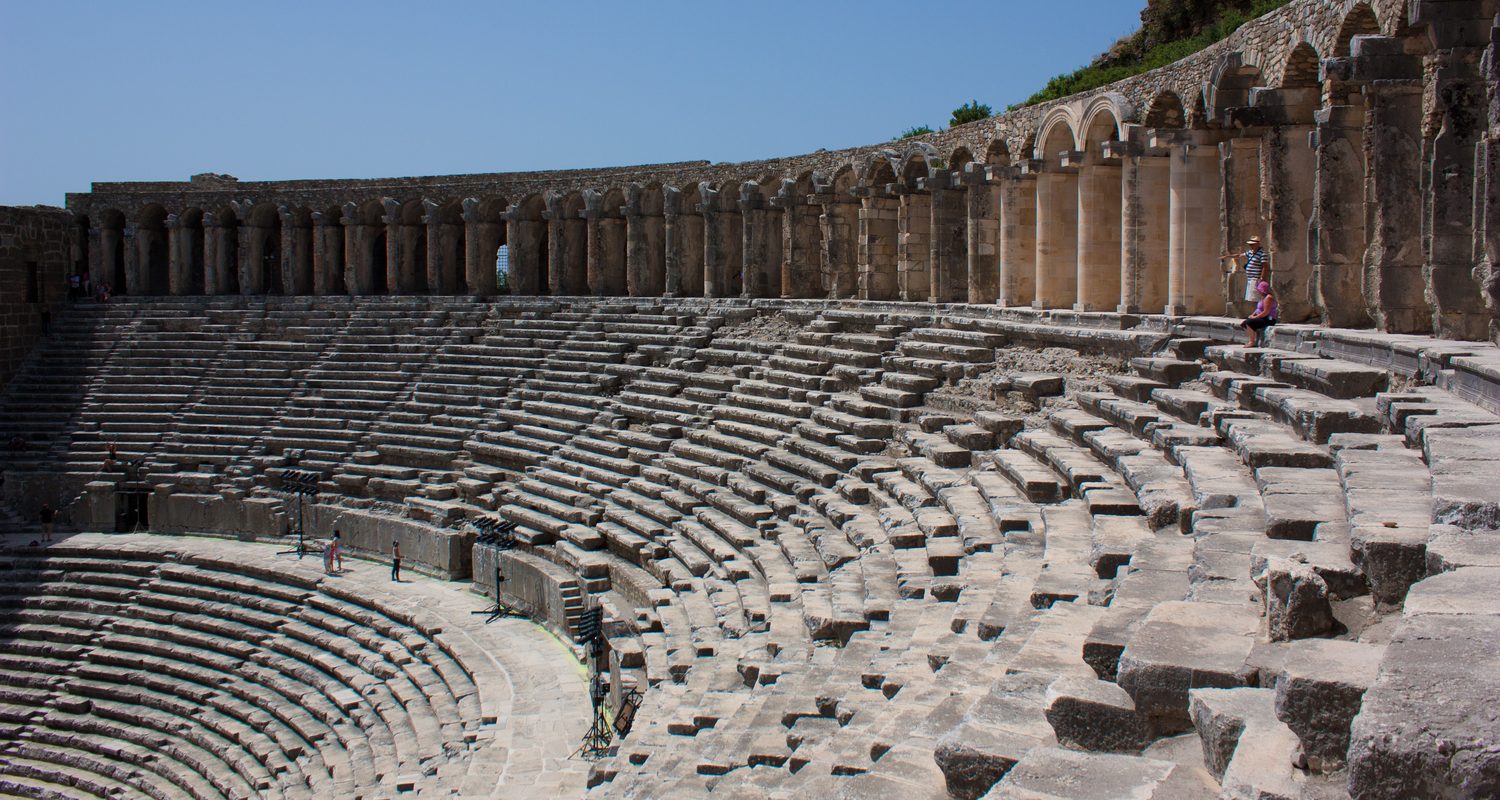
- Aspendos (Serik, approx. 20 km): Home to one of the best-preserved ancient theatres in the world. Locals long referred to the theatre as "Belkıs".
- Perge (Aksu, approx. 30 km): One of the most important cities of Pamphylia. It spreads over a wide area with its Hellenistic city gate, colonnaded street and stadium.
- Side (Manavgat, approx. 45 km): An ancient port city set on a peninsula reaching into the sea. The columns of the Temple of Apollo are among the most photographed spots in the region at sunset.
- Selge and Köprülü Canyon (approx. 80 km): An ancient city in the Taurus Mountains, overlooking the canyon. It is a great choice for those who want to combine nature and history in a single day.
Distances are approximate and may vary depending on the route taken.
Remains from the Roman Period
Most of the remains in the region date from the Roman era, Pamphylia's richest period. The Aspendos Ancient Theatre is the most famous of them: it was built in the 2nd century AD, during the reign of Emperor Marcus Aurelius, by the architect Zenon. As the stage building and the seating tiers are still largely standing, the theatre continues to host concerts and festivals today.
Just north of Aspendos, you can see the remains of the aqueducts that carried water to the city from distant springs. It is an easy stop to add to your theatre visit if you want to see Roman engineering up close. The nearby Köprüpazar Bridge was rebuilt in the Seljuk period on Roman foundations.
In Perge, the colonnaded street with a water channel running down its middle, the baths, the agora and the stadium with a capacity of around 12,000 show how everyday life worked in a Roman city. The Oluk Bridge in Köprülü Canyon is also a stone bridge from the Roman period that has been in use for centuries.
Discovering History and Nature Together in Belek
When planning your route of historical places in Belek, Antalya, taking the region's nature into account will enrich your trip. Belek's coast is lined with pine forests and dunes, and these beaches are among the nesting sites of sea turtles (Caretta caretta). Köprülü Canyon National Park brings history and nature together in a single day with its canyon views, rafting routes and the road leading to Selge.
Spring and autumn are the best seasons for a cultural tour. As there is little shade at the ancient sites in summer, it is advisable to plan visits for early morning or late afternoon and to bring water and a hat.
It is also possible to fit several stops into one day among the places to visit around Belek, Antalya: Aspendos and the aqueducts in the morning, Sillyon in the afternoon, for example. If your visit coincides with the opera and ballet festival in Aspendos, watching a performance on the ancient stage completes the experience.
Your Place to Unwind on a Cultural Tour: Sirene Hotel
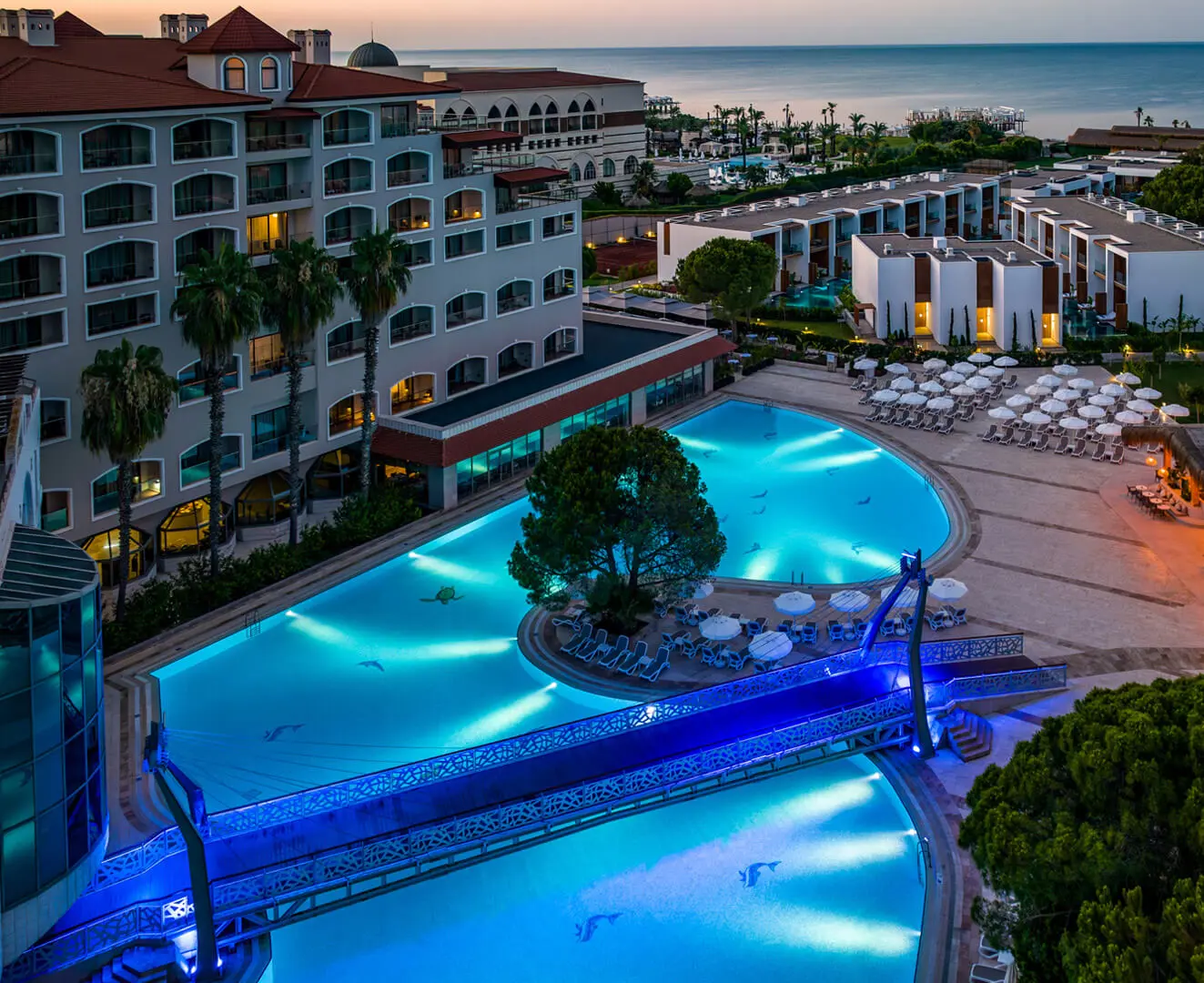
After a day of exploring ancient cities, where you rest directly shapes how much you enjoy your holiday. Among the Belek hotels within a short distance of Pamphylia's historical routes, Sirene Belek Hotel offers a comfortable base for those who want to combine a cultural tour with a sea and nature holiday. You can head to Aspendos or Perge in the morning, spend the afternoon on the beach and end the evening at the spa. Its location within walking distance of Antalya Golf Club is an added advantage for those who want to combine golf with a cultural route.
In short, Belek is not just a holiday resort; it is a gateway to Pamphylia's thousands of years of history. Routes stretching from Aspendos to Perge and from Sillyon to Side let you get to know the region's history up close in just a few days. With good planning and a comfortable stay, this discovery can become one of the most memorable parts of your holiday.